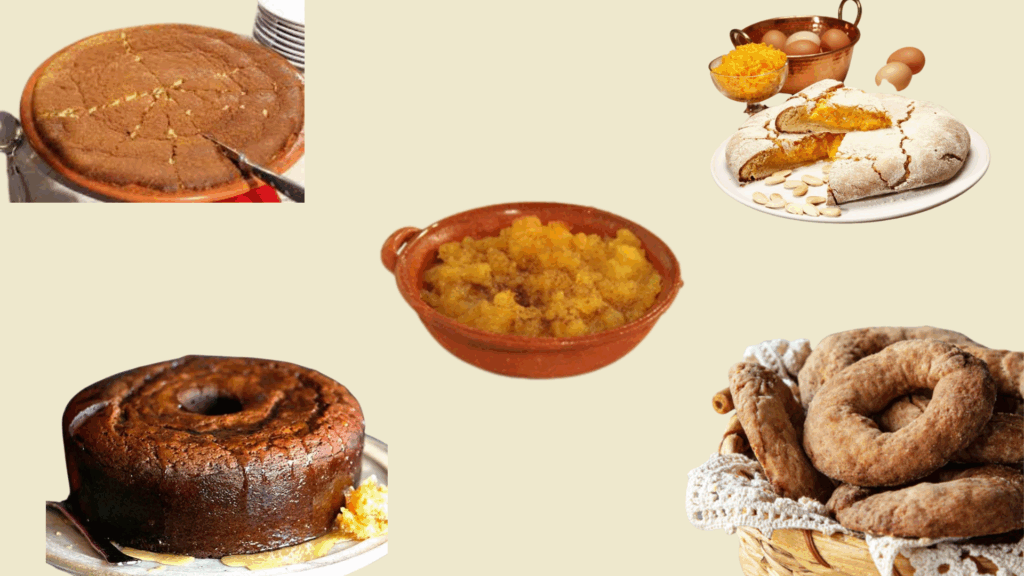

Make time to try these regional specialities before the end of your stay.
Alentejo Bread
This bread was once little known outside Portugal. It went on to receive international recognition and was described in 2021 as the world’s best bread. Recipes vary by town, and each locality has its own version.
Bacalhau Dourado from Elvas
Jacinta do Carmo Bucho created this cod dish at Portugal’s first pousada in Elvas in 1947. When Portuguese and Spanish government delegations arrived unexpectedly for a discreet meeting, she cooked with what she had. The Spanish guests called the yellow dish dourado, or golden. It is best eaten straight away.
Black Pork Charcuterie
Try regional cured sausages and meats such as black pork chouriço, paiola and salsichão.
Açorda Alentejana
The Arabic-derived name refers to crumbled, soaked bread. The dish arrived in Iberia with Muslim communities and remains an Alentejo staple. Stale bread is used in slices or cubes.
Migas and Gaspacho
Migas is a dish of softened stale bread, often served with pork. Alentejo gaspacho is a refreshing summer soup with chopped ingredients, which gives it a different texture and appearance from blended Spanish gazpacho.
Ensopado de Borrego
This lamb stew is associated with Easter and the spring equinox. Serve it over sliced bread and, if you like, with boiled potatoes. Let the bread soak up the broth.
Desserts
Bolo Rançoso is a convent cake. According to the story, a nun caught eating it claimed it was rancid bacon to avoid admitting to gluttony.
Pão de Rala, another convent sweet, uses an almond and egg-yolk paste. Fillings can include egg threads, sweet egg cream, candied gila squash and lemon peel, with variations using egg-yolk parcels or chocolate.
Encharcada is a simple convent sweet with regional variations, found throughout Portugal.
Bolo Podre has different versions in the upper and lower Alentejo, Algarve, Madeira and Castro Daire. Regional nuns are credited with the Alentejo recipe. The name may refer to how long it keeps in a closed tin.
Popias Alentejanas are dry, ring-shaped cinnamon biscuits made with flour, sugar, white wine, olive oil, lard and cinnamon, sometimes flavoured with aniseed and dusted with sugar.
Sericaia, also called sericá or cericá, is a convent dessert with disputed origins in India or Brazil. The Elvas tradition serves it with local plums.